2026
AI Era Design System
The problem
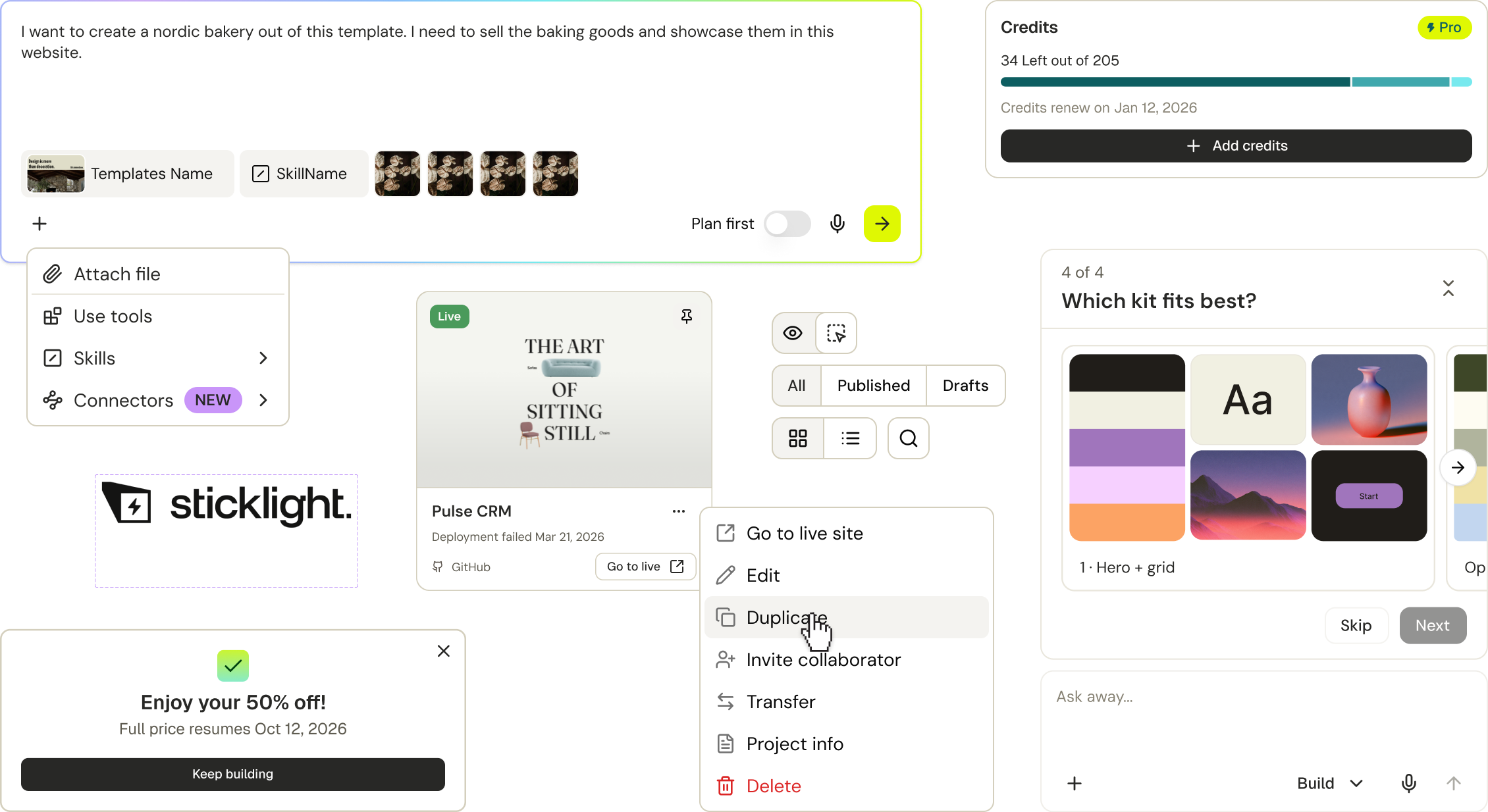
Building and maintaining the Design System is slow and inconsistent when it’s done manually. Figma variables and the codebase can drift apart, and there’s no reliable way to compare them. Earlier vibe coding tools couldn’t touch the Figma files directly. They also tended to invent values, such as colors that aren’t in the token set, which undermines a system that depends on exact, semantic tokens.
The goal
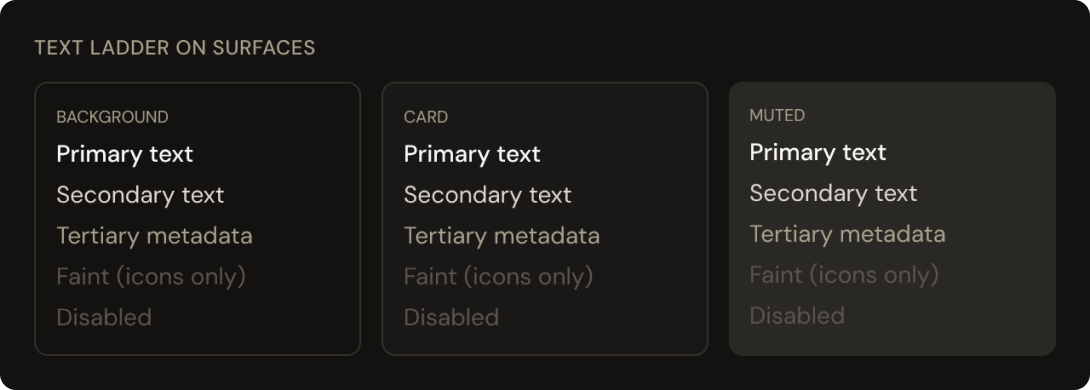
Create a single, shared visual language that lets design and engineering build consistent products faster, with fewer decisions to remake and fewer errors to fix. Sticklight is working on a mono-repo on GitHub so adding the design system guideline to the code so the agent builds correctly is a needed and easy-to-implement shift.
The process
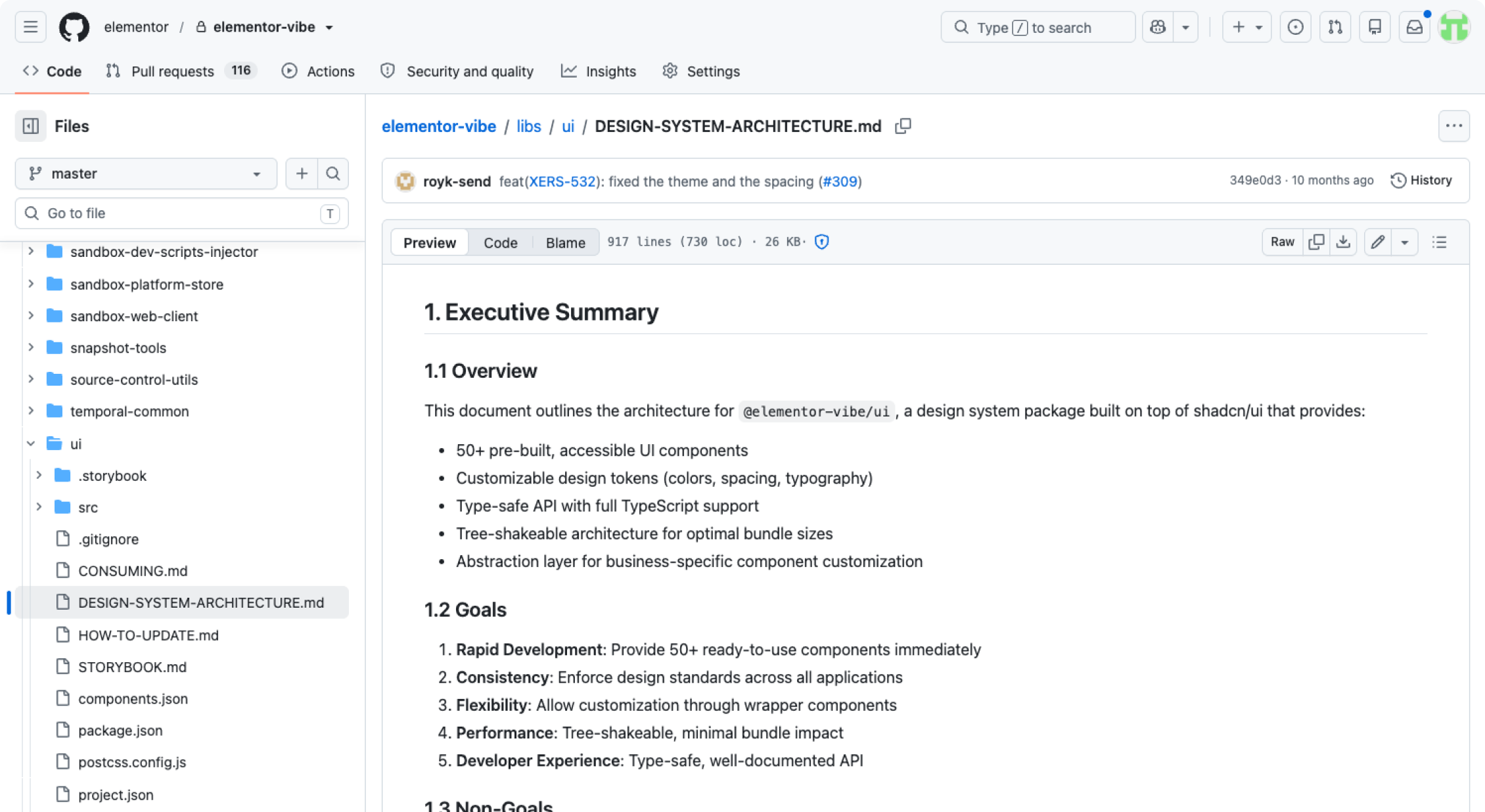
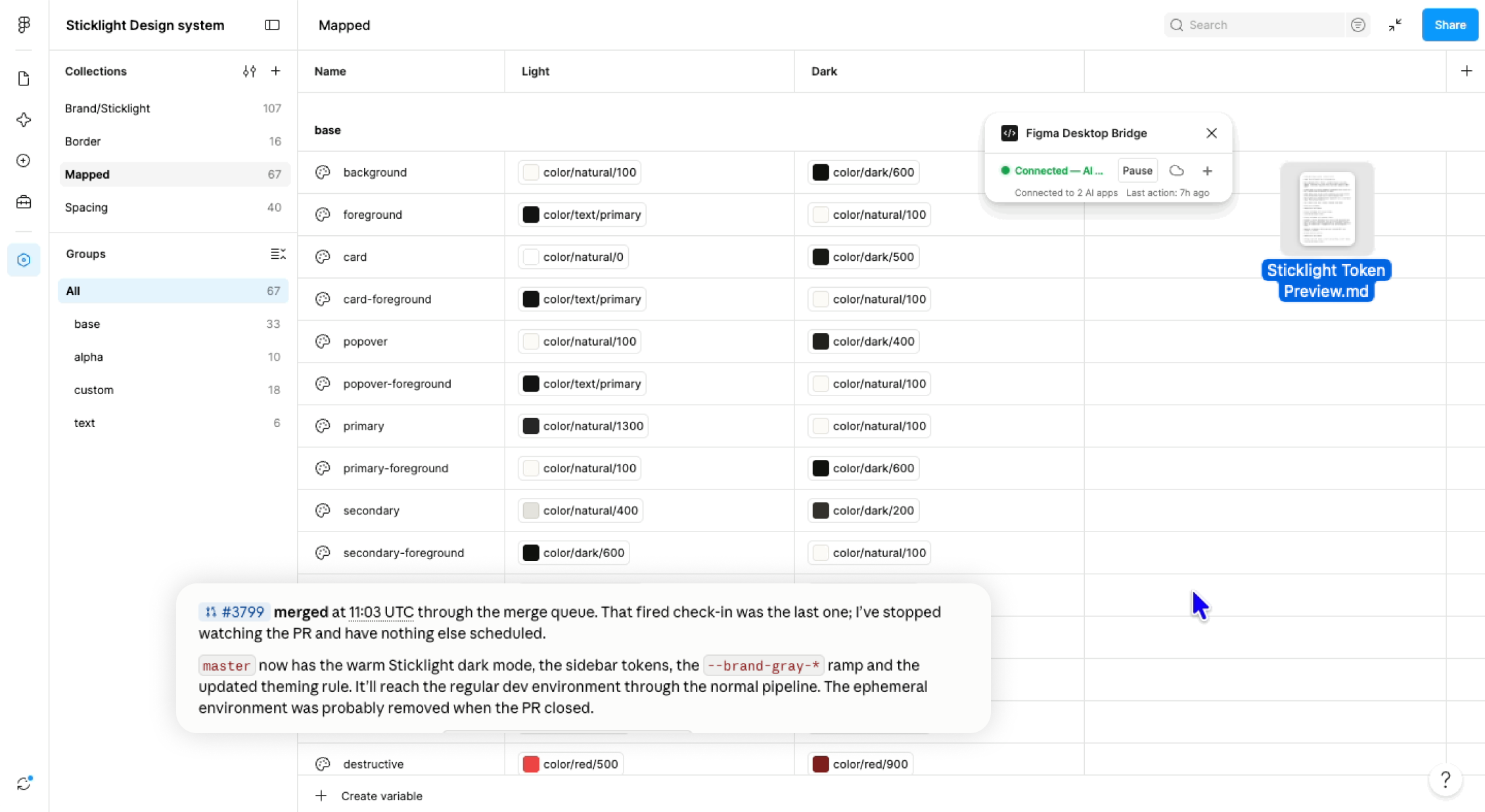
We’ve set up an AI-based design workflow that connects our codebase through Claude Code to Figma (using Figma Desktop Bridge and Figma MCP). Claude can now read and manipulate Figma files programmatically, and create PR to the codebase according to Figma changes, which lets us build and maintain the Sticklight Design System much faster and more consistently. The mirror that Claude creates between Figma and the codebase with design system MDfile is a win.
Done so far
- Claude Code←→Figma connection is live and running.
- The token architecture is defined. We settled on a three-layer structure:
- Primitives: raw values for color, spacing, typography, and font weights
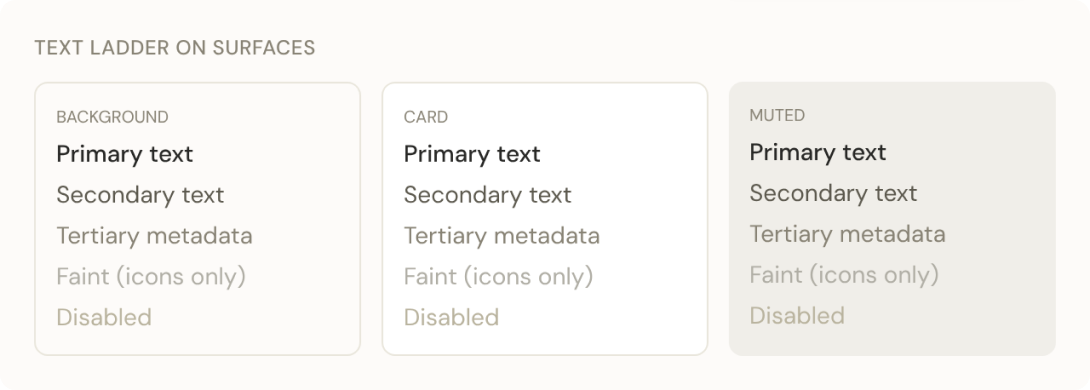
- Semantic: named roles such as border, border-light, and border-dark
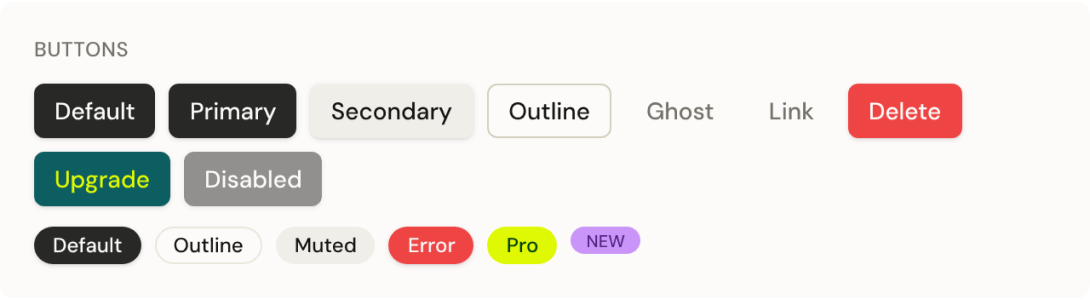
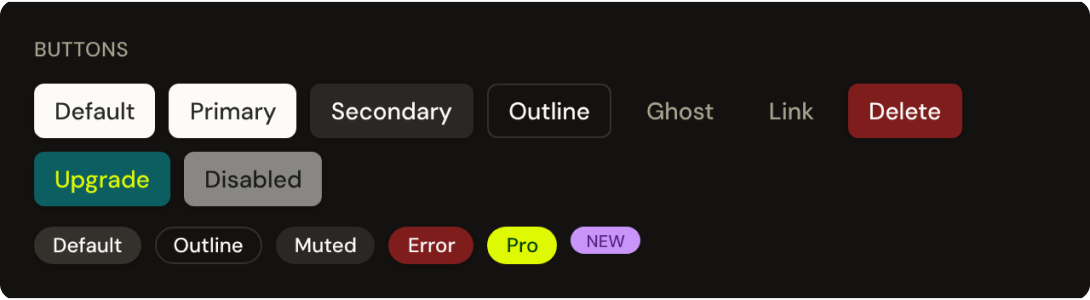
- Themes: light/dark mappings that show how each token behaves in each mode
- Guardrails for component work are set. Variables must be applied exactly, including all hover and behavior states. Every color must be a real semantic token. If a color isn’t in the token set, Claude flags it instead of inventing one.